
In 2026, with 35% of enterprises reporting they have already replaced at least one SaaS tool with a custom-built solution. This article breaks down the psychology behind the “we can build that” mindset, exposes the hidden costs of ownership, maintenance, and delayed revenue, and equips CROs with the questions their teams need to guide smarter build vs buy decisions. It also challenges revenue leaders to ask a harder question: are your salespeople prepared to handle this conversation in every deal?

Why Sales Initiatives Fail: The Manager Multiplier Gap
Most sales initiatives don’t fail because of bad strategy; they fail because behavior never changes in the field. Companies invest heavily in enablement, training, and rollout, but overlook the one layer that actually drives execution; frontline managers. When managers aren’t equipped to reinforce new behaviors consistently, initiatives stall, budgets get wasted, and teams revert to old habits.


The Hypocrisy of Sales Leadership
Sales leaders demand process, discipline, and consistency from their reps; yet most managers walk into one-on-ones without a system, relying on instinct and urgency instead of structure. This double standard creates inconsistent performance, stalled development, and avoidable attrition. If sales is a science at the rep level, management must be treated the same way.
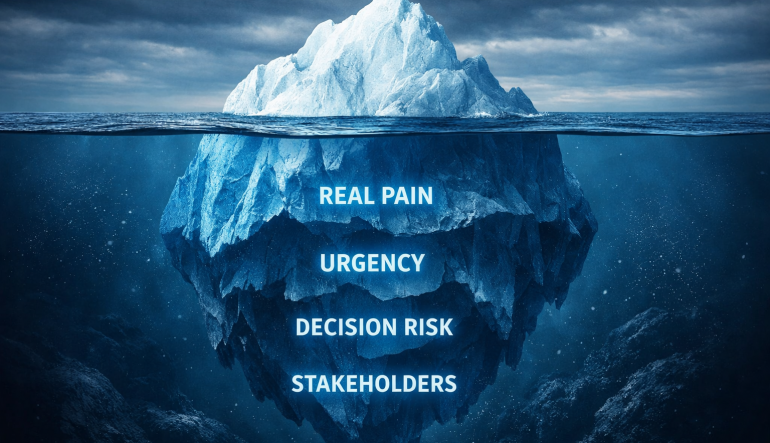
The Iceberg Problem: Why Surface-Level Questions Are Costing You Millions
Most sales teams believe they’re executing their methodology correctly. The CRM is clean, the boxes are checked, and deals are marked “qualified.” Yet the number still gets missed. The problem is not activity; it is depth. In this piece, we break down the “Iceberg Problem” in sales, why surface-level questions create false confidence, and how leaders can drive deeper discovery, stronger coaching, and more predictable pipeline performance.

The Example Effect: What Leaders Model, Teams Multiply
Your team studies you more closely than your competitors study your pricing page. If your 1:1s are reactive and deal focused, your reps will sell the same way. The Example Effect explores how leaders unintentionally train mediocrity or multiply excellence through the conversations they model every week.

Why Most Sales Kickoffs Fail
Sales Kickoffs create alignment and energy, but they rarely change outcomes. By March, most teams revert to old habits. This essay explores why SKOs fail to drive behavior change and how the best CROs turn strategy into a sales lifestyle through consistent coaching systems.

Is 2026 the Year You Finally Turn Your Front-Line Managers into Multipliers?
Most sales organizations are handing their front-line managers a hospital pass. Coaching is reactive, inconsistent, and unsupported. This post breaks down what CROs revealed in our end-of-year coaching quiz and why 2026 must be the year you turn managers into true performance multipliers with an AI-Powered Manager Operating System.

Knowledge vs Wisdom: The Difference Between Knowing What’s Wrong with Your Rep and the Wisdom to Understand What to Do About It
Your sales tech stack can tell you what’s wrong with your rep’s performance, but it can’t coach them. Causal AI helps surface the signal, but it’s the manager’s wisdom that turns insight into action. Learn why knowledge alone won’t move the needle, and how CoachEm empowers managers to coach smarter, not harder.

Coach2Scale’s Final Episode with Matt Benelli
After more than 100 episodes, #Coach2Scale wraps with a powerful closing message from host Matt …
Read More