

Most sales teams are drowning in data but still missing the diagnosis. Pipeline gaps, stalled deals, and repeated objections are not the problem; they are symptoms. The real issue sits upstream in rep behavior and manager visibility.

The AI Thirst Trap: Why Desperate Leaders Get Hooked by “We Can Build That”
In 2026, with 35% of enterprises reporting they have already replaced at least one SaaS tool with a custom-built solution. This article breaks down the psychology behind the “we can build that” mindset, exposes the hidden costs of ownership, maintenance, and delayed revenue, and equips CROs with the questions their teams need to guide smarter build vs buy decisions. It also challenges revenue leaders to ask a harder question: are your salespeople prepared to handle this conversation in every deal?


Why Sales Initiatives Fail: The Manager Multiplier Gap
Most sales initiatives don’t fail because of bad strategy; they fail because behavior never changes in the field. Companies invest heavily in enablement, training, and rollout, but overlook the one layer that actually drives execution; frontline managers. When managers aren’t equipped to reinforce new behaviors consistently, initiatives stall, budgets get wasted, and teams revert to old habits.
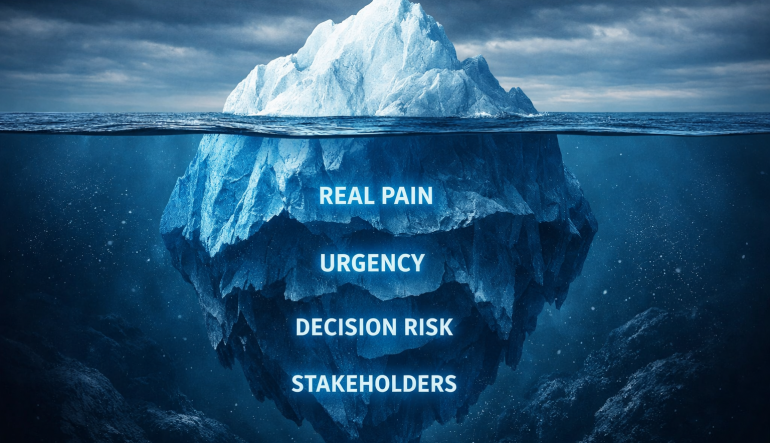
The Iceberg Problem: Why Surface-Level Questions Are Costing You Millions
Most sales teams believe they’re executing their methodology correctly. The CRM is clean, the boxes are checked, and deals are marked “qualified.” Yet the number still gets missed. The problem is not activity; it is depth. In this piece, we break down the “Iceberg Problem” in sales, why surface-level questions create false confidence, and how leaders can drive deeper discovery, stronger coaching, and more predictable pipeline performance.

Why Q1 Revenue Is Worth 3x More Than Q4
Most sales teams obsess about finishing strong in Q4. Smart CROs focus on something else entirely: winning early. Revenue closed in Q1 creates momentum, confidence, and pipeline that compounds across the entire year. Revenue delayed until Q4 creates pressure, discounting, and desperation. This article explains why early revenue carries far more strategic value than late revenue, and what CROs should focus on in the first quarter to build real revenue runway.