

We promote successful sales reps into management and assume they know how to coach, develop people, and run effective one-on-ones. Many were never taught. That creates a problem that compounds from one generation of sales managers to the next.

Evidence Beats Hearsay in Sales Forecasting
Frontline sales managers are the highest-leverage variable in sales performance, but most organizations still manage them with weak visibility, inconsistent coaching habits, and too much reliance on deal-by-deal triage. This article makes the case for treating manager effectiveness as a measurable operating system, not a soft skill left to chance.


Symptoms, Side Effects, and Signals: Why Most AI Sales Tools Don’t Impact Revenue
Most sales teams are drowning in data but still missing the diagnosis. Pipeline gaps, stalled deals, and repeated objections are not the problem; they are symptoms. The real issue sits upstream in rep behavior and manager visibility.

The Hidden Lever for Increasing Pipeline This Quarter
Most sales leaders chase pipeline by pushing for more activity; the real lever sits with frontline managers. When managers consistently run structured 1:1s, focus on behavior instead of deals, and hold reps accountable week over week, pipeline growth follows. The data is clear; teams with disciplined manager execution dramatically outperform those without it.

Why Sales Initiatives Fail: The Manager Multiplier Gap
Most sales initiatives don’t fail because of bad strategy; they fail because behavior never changes in the field. Companies invest heavily in enablement, training, and rollout, but overlook the one layer that actually drives execution; frontline managers. When managers aren’t equipped to reinforce new behaviors consistently, initiatives stall, budgets get wasted, and teams revert to old habits.

The Hypocrisy of Sales Leadership
Sales leaders demand process, discipline, and consistency from their reps; yet most managers walk into one-on-ones without a system, relying on instinct and urgency instead of structure. This double standard creates inconsistent performance, stalled development, and avoidable attrition. If sales is a science at the rep level, management must be treated the same way.
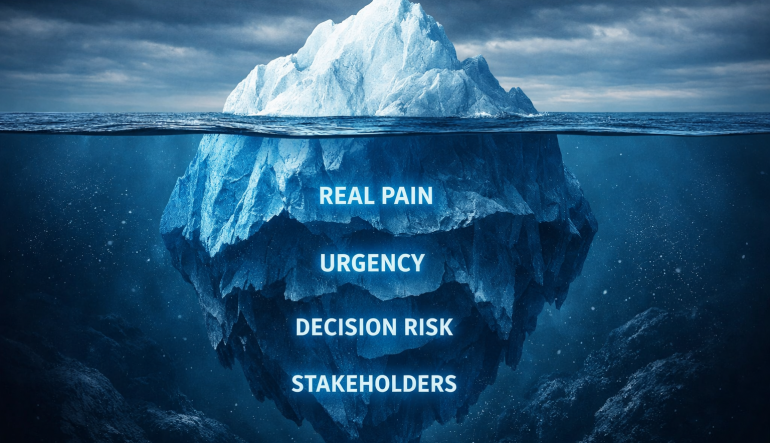
The Iceberg Problem: Why Surface-Level Questions Are Costing You Millions
Most sales teams believe they’re executing their methodology correctly. The CRM is clean, the boxes are checked, and deals are marked “qualified.” Yet the number still gets missed. The problem is not activity; it is depth. In this piece, we break down the “Iceberg Problem” in sales, why surface-level questions create false confidence, and how leaders can drive deeper discovery, stronger coaching, and more predictable pipeline performance.

The Example Effect: What Leaders Model, Teams Multiply
Your team studies you more closely than your competitors study your pricing page. If your 1:1s are reactive and deal focused, your reps will sell the same way. The Example Effect explores how leaders unintentionally train mediocrity or multiply excellence through the conversations they model every week.

Agency Not Agents: The Future of Sales Teams
AI doesn’t replace human sellers. It amplifies judgment. Why CROs need to stop building AI sales agents and start empowering managers and reps with agency, clarity, and accountability.